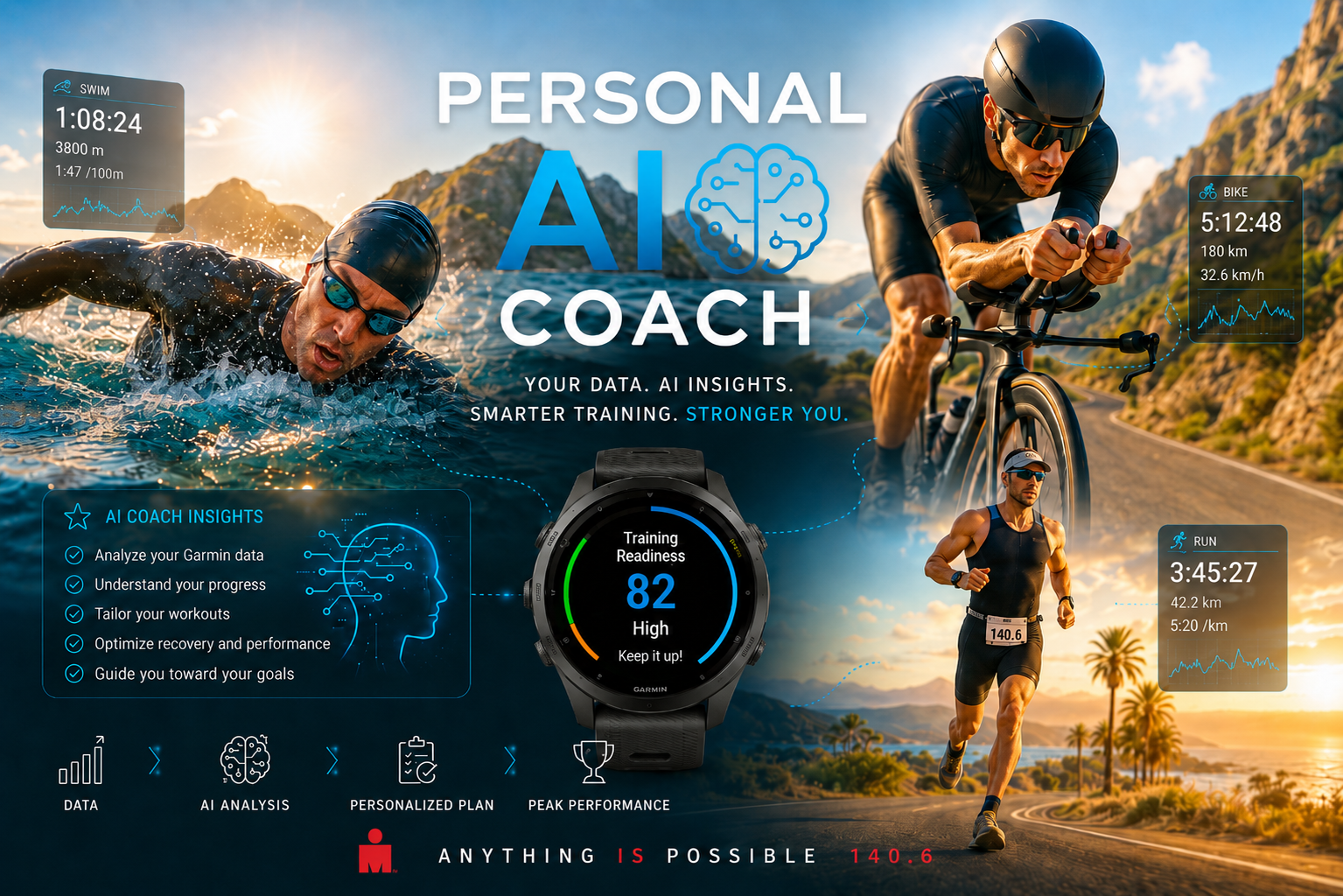
As I have already written before, an important part of my life today is my passion for triathlon, the training, the races, and everything that comes with preparing for endurance sport.
At the moment, my main goal is the Ironman 70.3 in Cervia in September. This will be my second attempt.
The first one, last year, went well and I finished the race. Still, I know I could have done better. This year, I am trying to do a little more, but above all, to do things better. I also feel that I am approaching the whole journey with more awareness, thanks to my coach Mauro and to the entire team at TnT, The Nexus Training.
Training for a long-distance race like a 70.3 requires time, consistency, and discipline. We train almost every day, with the necessary exceptions for work and life, and we also need to pay attention to other essential aspects such as nutrition and recovery.
I have a long-term plan and a weekly plan. My coach updates them based on the training phase, my progress, and any intermediate races. In the coming weeks, for example, I will run a 10K race, and in June I will take part in an Olympic-distance triathlon.
All my training data is recorded using my Garmin Forerunner 955 and the Garmin Edge 1030 that I use on my bikes. My coach assigns the workouts and we share them through Coachpeaking, a web platform entirely made in Italy.
For nutrition, I follow a plan created by Adriano, the team nutritionist. We review it periodically and adjust it when needed.
At some point, looking at all this through the lens of improvement, and also bringing in my professional experience with AI, I had an idea.
Why not use the training data stored in Garmin Connect and analyze it periodically with the help of AI?
Then I had a second thought: why not also create a simple nutrition diary, where I record what I eat every day for breakfast, lunch, and dinner, and compare it with Adriano’s nutrition plan, again using AI?
Of course, the goal is not to replace the valuable guidance of my coach and nutritionist. I would never think of doing that. The idea is different: to ask an “AI assistant” to help me take a closer look at how I actually implement those plans and how consistently I follow them.
And I can honestly admit that my adherence is not always 100%.
This is how my project Personal AI Training Coach was born.
The project is open source, and all the code is available in its GitHub repository:
More updates will come soon. In the meantime, you can also follow the project milestones on GitHub.
By the way, if you want to see some beautiful photos from our races and training moments, you can find them on Instagram, thanks to our media manager Micaela, who captures and shares many of these moments with the team.
Stay tuned.


